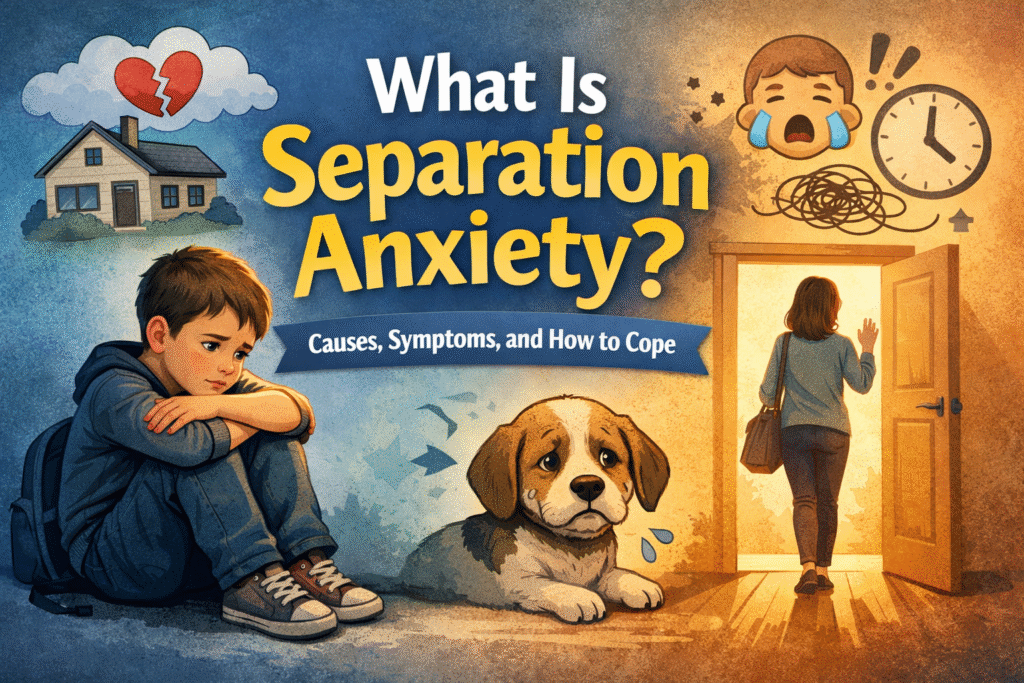
Separation anxiety is an emotional experience that many people associate with young children, the tearful goodbye at preschool drop-off or the clinginess when a parent leaves a room. But while brief distress around separation is normal, especially in early childhood, separation anxiety can also become more intense, persistent and disruptive in both children and adults. Understanding what separation anxiety is, what fuels it, how it shows up, and what you can do to cope is important for anyone facing this challenge or supporting someone who is.
Understanding What Is Separation Anxiety
At its simplest, separation anxiety refers to strong fear or distress when separated from someone to whom a person feels emotionally attached. For many infants and toddlers, this fear is a normal stage of development as they learn that people they love still exist even when out of sight. This typically begins around six to eight months of age and peaks between 14–18 months. In most cases, children gradually become more comfortable with short separations as their confidence and sense of safety grows.
However, when this anxiety becomes intense, long-lasting, and interferes with everyday functioning such as attending school, going to work or engaging in social life it may meet the criteria for a clinical condition called separation anxiety disorder. This diagnosis can apply not only to children but also to adolescents and adults.
What Causes Separation Anxiety?
Separation anxiety doesn’t have one single cause. Rather, a mix of biological, psychological and environmental influences can contribute to its development.
- Developmental Factors
In early childhood, separation anxiety is often a natural part of growing up and forming secure attachments. As children start to explore the world independently, their fear of losing the safety of a caregiver may temporarily increase. - Personality and Temperament
Some children and adults have a more sensitive or anxious temperament, making them more likely to feel distress in situations involving separation. Individuals who are naturally cautious or shy may also struggle more with separations. - Family and Attachment History
Early attachment experiences play a significant role. Children who experienced inconsistent caregiving, over-protective parenting, or who had stressful early relationships may be more prone to separation anxiety. In adults, past unresolved separation concerns from childhood can resurface under stress. - Traumatic or Stressful Events
Major life changes such as moving house, starting a new school, the death or illness of a loved one, or other losses can trigger or worsen separation anxiety in both children and adults. - Genetic and Biological Factors
There is evidence that genetic predispositions and personality traits may increase vulnerability to anxiety, including separation anxiety. These factors interact with life experiences to shape how someone responds to separations.
Common Symptoms of Separation Anxiety
Symptoms of separation anxiety vary depending on the person’s age, but there are core features that often show up in both children and adults:
- Intense distress about separating from a loved one:
This may appear as panic, crying, refusal to be apart, or persistent worry that something terrible will happen to the attachment figure. - Excessive worry about harm coming to loved ones:
Thoughts like “What if they get sick?” or “What if they don’t come back?” can dominate someone’s thinking and lead to rumination and anxiety. - Difficulty with everyday separations:
This can look like struggling to go to school or work, avoiding travel or social events, or needing constant reassurance about the whereabouts and wellbeing of close people. - Physical symptoms:
Separation anxiety can trigger headaches, stomachaches, nausea, rapid heartbeat, and other stress-related sensations, especially when anticipating or experiencing separation. - Sleep problems:
Nightmares that involve themes of separation or fear of sleeping alone are common in those with separation anxiety disorder. - In children specifically:
Tantrums, clinginess, refusal to sleep away from caregivers, or school refusal may all signal separation anxiety.
For adults, separation anxiety can manifest as needing frequent contact with loved ones, obsessively worrying about their safety, or feeling unable to be apart even briefly without significant emotional distress.
How to Cope and Manage Separation Anxiety
While it can feel overwhelming, separation anxiety is treatable. Many people find improvement through psychological support, practical strategies and, where appropriate, professional therapy.
1. Establish Predictable Routines
Consistency helps create a sense of security. Predictable routines around separations such as a goodbye ritual for kids can make transitions less intimidating over time.
2. Gradual Exposure
Instead of avoiding separations, gradually increasing time apart can help reduce fear. For example, starting with short separations and gradually lengthening them allows the nervous system to learn that the feared outcome (harm, abandonment) does not occur.
3. Cognitive Restructuring
Learning to identify and challenge anxious thoughts such as catastrophising what might happen during separation can reduce mental distress. This approach is often a core part of cognitive behavioural therapy (CBT).
4. Emotional Regulation Skills
Practices like deep breathing, mindfulness, journaling and grounding techniques help reduce the physical and emotional intensity of anxiety.
5. Professional Support
A psychologist or counsellor can provide tailored strategies, support emotional processing, and help build confidence in managing separations. For some people, especially adults, therapy can be highly effective for long-term change.
6. When Needed, Medication
In more severe cases, a GP or psychiatrist may recommend medication such as selective serotonin reuptake inhibitors (SSRIs) to help regulate anxiety. This is usually considered alongside therapy rather than as a first-line solution.
Final Thoughts
Separation anxiety exists on a spectrum: from the typical distress young children feel when apart from caregivers, to the more persistent and disabling anxiety recognised as a clinical condition. Knowing what separation anxiety is allows parents, caregivers and adults alike to recognise when support may be needed, and to approach the experience with understanding and effective coping strategies.
With patience, connection and evidence-based support, separation anxiety can be managed and reduced, helping people build confidence, resilience, and freedom from fear around separation.